Memphis set aside $2 million from data center tax revenue for home repairs. Before the November 25 application deadline, renters face a question the announcement can’t answer: Will the person who owns the house sign?
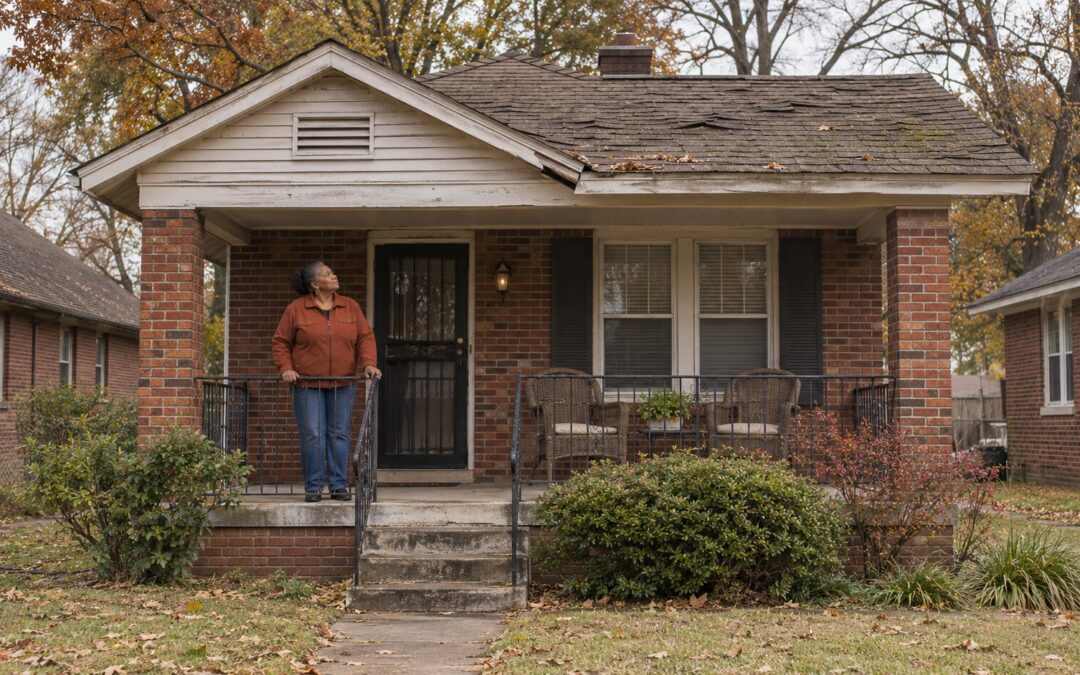
When the ceiling starts to drip in a rental, it’s the tenant who moves the bed. But if that tenant wants to use Memphis’s new repair program, it’s the landlord who has to sign. The roof is over one person’s head and on another person’s deed. That difference could decide whose house gets fixed.
On November 13, the City of Memphis announced that its City Council had approved $3,259,282 in community benefits, including $2 million for home repairs through Memphis HOPE. Under a city ordinance, part of the property tax revenue from the Colossus I data center on Paul R. Lowery Road goes back to the area around it. That is a real allocation. It is not yet a count of roofs repaired, furnaces replaced or tenants who can stay in the homes the public helped fix.
A renter can apply. An owner can say no.
Under the city’s HOPE rules, a tenant can qualify based on household income, but the owner must authorize the work in writing and sign the required agreements. An approved property can receive up to $25,000 in eligible repairs through a zero-interest, deferred loan secured by a lien. The loan can be forgiven after three years if its conditions are met. In a rental, the owner takes on the loan and agrees to rent limits for three years; the tenant does not take on the debt. This is neither cash in a resident’s hands nor a guarantee that rent will never rise.
There are reasons to put conditions on public money that improves a private asset. But consider what happens when an owner won’t participate. The house still needs repair. The tenant may be income-eligible. And if the application never gets finished, an accounting that begins at approval will miss that household altogether. Memphis should make it possible to record that obstacle without asking tenants to expose themselves publicly.
Count the homes, not just the dollars
In a city where a majority of residents are Black, and where the city itself identifies South Memphis as predominantly Black, the racial reach of this money matters. Citywide numbers do not tell us who lives inside the exact HOPE boundaries, who applied, or who got a repair. As of the morning of November 20, I found no public breakdown of HOPE applications, awards or completed repairs by race and whether households own or rent. Newbeings 1619 seeks to help fill gaps like this with verified information that protects residents’ identities.
The Community Benefits Fund should report how many households start applications, how many are approved, what stops the rest and how many actually get repairs. Break out homeowners and renters, publish racial and geographic detail where privacy allows, and distinguish a landlord declining to sign from an applicant being ineligible. The ordinance can direct money to a neighborhood. Only that follow-through can show whom it reached.
Keep a separate public record of what the city and regulators require of data centers, including published monitoring and enforcement. A good roof is a benefit, not a substitute for knowing what a facility emits or how complaints are handled. A city can invest in the people who live nearby and still insist on enforceable protections for them.
What Memphis residents can do before Wednesday night
As of November 20, Phase I applications are due Wednesday, November 25, at 11:59 p.m. Memphis time. Go to the city’s HOPE page and use its address checker. A property must be within both HOPE Zone 1 and the City of Memphis. Household income must be at or below 120% of area median income for the household’s size, and other conditions apply. Use the owner or renter checklist before submitting. If you rent, ask for written permission now and call 901-636-7354 for city guidance or an in-person appointment if you need help.
If you’re watching from another city, ask the people negotiating your data center deal how they will count households that couldn’t get through the door, not just the dollars that went out. Bring public documents or your experience with the process to the Newbeings 1619 social platform, without posting addresses, income documents or lease details. Next time a city announces that the neighborhood is getting its share, let’s be able to point to the houses where that promise held.
The council counted dollars. The roof took all the blame.
The renter felt the weather. The owner held the claim.
Don’t tell us what you set aside, then leave the ledger bare.
Show us who can sleep tonight with no bucket by the stair.