
UNITY
Ella Baker, a pioneering civil rights activist and advocate for Participatory Democracy, could not have envisioned today's advanced technology. However, her forward-thinking vision is now within reach, and the time has come to make it a reality.
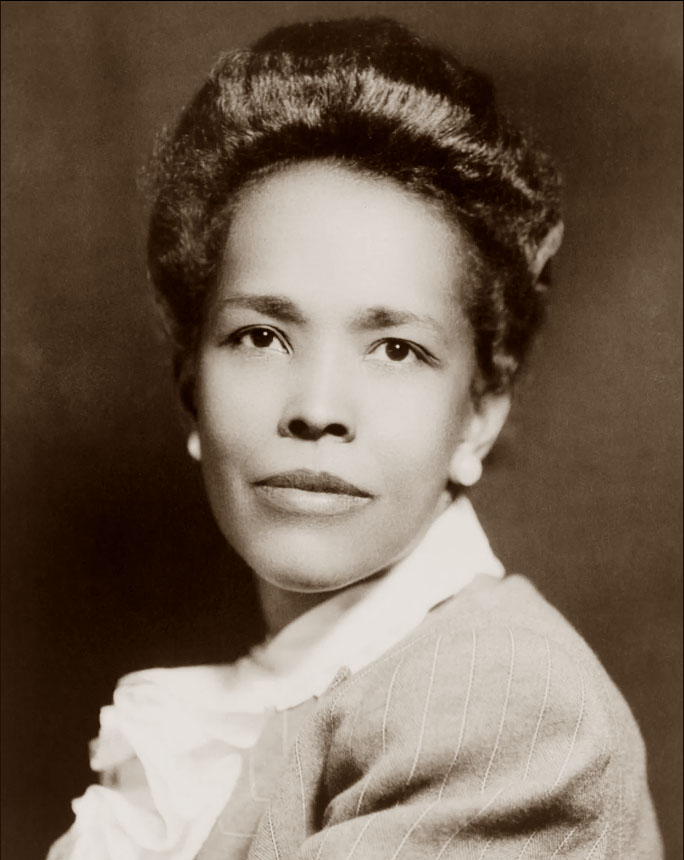


At this pivotal moment in our history, our communities, enriched by an empowered population of Newbeings (Decolonized Black Americans), stand ready to make a momentous impact on every challenge before us. Bound by a collective will and awakened sense of responsibility, we are prepared to honor the power of our vote and drive transformative change.

"Strong people don't need strong leaders." -Ella Baker


BLACK AMERICAN VOTES & SURVEYS
(Actual Votes And Surveys Take Place In Social Media Platform)
Collective Intelligence:
From Foresight to Action
Many ways of knowing. A shared capacity to act.
Explore how evidence, scientific models and Black American collective knowledge connect.
This is an ever evolving system. Its models, classifications and methods develop as new evidence and collective knowledge emerge.
Choose an illustrative pathway
These examples explain the architecture. They do not generate real forecasts.
Explore the intelligence network
The accessible architecture is available below.Architecture Demonstration. Animated paths illustrate relationships, not live data processing. No operational predictions, alerts or confidence scores are displayed. Validated Forecasting is reserved for future operational models with verified data and published accuracy testing.
01Explore the architecture in text +
About the name: Zoran Taʒa means human nature. Taʒa (TAH-zhah), written Tazha in everyday typing, means the inherent qualities and characteristic tendencies of a being or thing. The ʒ sounds like the s in measure. Forecasting estimates what may happen. The Solution Cipher develops possible responses. Decentralized leadership authorizes action. Measured outcomes supply new evidence.
Zoran Taʒa Forecasting System
A research architecture bringing multiple sources of evidence and independently evaluated methods together to study possible futures.
BACF contributes within this architecture. The Solution Cipher and decentralized leadership have separate responsibilities outside the forecasting engine.
Observations & Evidence
Gather evidence with provenance, consent where needed, timestamps and clear definitions.
Feeds relevant research groups and BACF. Repeated reports are not automatically independent evidence.
Quantitative Models
Estimate specified outcomes using mathematical and computational models. Different methods can produce different forecasts.
Candidate results enter the Ensemble Forecasting Engine after evaluation. The catalog retains original names rather than inventing a complete operational model registry.
Behavioral & Explanatory Frameworks
Help explain mechanisms, formulate hypotheses and identify which questions or variables to investigate.
Inform interpretation and model specification. A theory needs an explicit tested model before its output can be weighted in an ensemble.
Candidate Leading Indicators
Look for measurable signals that may precede changes. Leading relationships must be tested against appropriate baselines.
Indicators are observations, not standalone prediction engines. The Lipstick and Hemline indices must not be treated as reliable alerts.
Black American Collective Foresight
A proposed research methodology combining historically documented Black American experience, community observation, independent attestation and structured collective judgment.
An integral component of Zoran Taʒa Forecasting System. Its forecasting advantages have not been scientifically validated. This is accumulated knowledge and structured reasoning, not uniform or inherited forecasting ability.
Ensemble Forecasting Engine
Compare eligible model outputs, evaluate agreement and disagreement, and combine forecasts where justified.
Shared data can make forecasts dependent. Weighting must be justified by validation, not by how many models agree.
Forecast Outputs
Communicate emerging trends, early warnings and alternative future scenarios.
Findings can inform the Solution Cipher. This demonstration contains no actual predictions, confidence percentages or active alerts.
Black American Solution Cipher
Develop and evaluate possible responses using SWOT Analysis, Nominal Group Technique, the Delphi Method and Black American je ne sais quoi.
Outside BACF and the forecasting engine. It explores what might be done; it does not authorize action.
Decentralized Leadership
Enable community evaluation, authorization through voting and coordinated execution.
Forecasting does not make the decision. Collective authorization and execution are distinct from predicting outcomes.
Outcome Feedback
Measure what happened, compare outcomes with expectations and improve future work.
Returns evidence to observations. An intervention can change the outcome, so prediction accuracy and intervention impact need separate evaluation.
BACF: seven research modules
Compare documented historical cases, identify similarities and differences, and develop testable hypotheses. Avoid assuming history repeats mechanically.
Organize community observations with independent attestation, consent and checks for duplication or rumor.
Study changes in language, cultural expression and public conversation in context.
Study how households and communities adapt to constraints and opportunities.
Examine how institutional rules, capacity and past responses shape possible outcomes.
Study conditions that support participation, cooperation and sustained collective action.
Document and critically compare knowledge passed across generations, preserving provenance and differences in perspective.
Research status: BACF is a proposed methodology. Its forecasting advantages have not yet been scientifically validated. Its contribution is documented experience and structured reasoning, not a uniform or inherited ability.
02The research inventory 138 entries+
Provisional split from the handoff: 80 quantitative, 42 explanatory, 16 indicators. The recovered list names 15 indicators (entries 45–59); the individual assignments and the 16th indicator remain unresolved. All 138 original entries are retained below.
Browse the original inventory by descriptive research area. These areas organize the catalog; they do not resolve the provisional A/B/C assignments. Some entries are families, frameworks, systems or signals rather than individual prediction engines.
138 entries
Individual behavior 16
Relates intentions and perceived control to action; intentions do not guarantee behavior.
Relates attitudes and perceived social expectations to behavioral intentions.
Explains how motivation, ability and a prompt can coincide to enable an action.
Organizes capability, opportunity and motivation as conditions for behavior.
Explains health actions through perceived risk, benefits, barriers and cues.
Examines how threat appraisal and coping appraisal influence protective intentions.
Explains reciprocal influences among behavior, personal factors and environment.
Describes stages of behavior change; stage boundaries require scrutiny.
Examines how autonomy, competence and relatedness influence motivation.
Estimate how actions change with feedback, rewards and learned value.
Models risky choices relative to a reference point, including loss aversion.
Estimate how the subjective value of an outcome changes with delay.
Distinguish relatively automatic and deliberative contributions to judgment.
Explains responses to inconsistency among beliefs and actions.
Describes personality dimensions associated with some behavioral tendencies; not individual destiny.
Describes six personality dimensions and their statistical associations with behavior.
Groups and collective behavior 12
Explains how group identification can influence attitudes and intergroup behavior.
Examine how perceived expectations and others' behavior influence action.
Models participation as dependent on how many others have already participated.
Represent potential transmission of behaviors or beliefs through contacts; distinguish influence from selection.
Explains adoption through communication, social systems and perceived innovation attributes.
Examines when fear of isolation may suppress public expression of opinions.
Study differences between privately held preferences and publicly expressed positions.
Examine behavior when people misread the private attitudes of others.
Represent learning through observation, imitation and consequences.
Explains how perceived disadvantage relative to a comparison group can motivate responses.
Examine participation, shared benefits, costs and coordination problems.
Simulates how local residential preferences can generate aggregate segregation.
Choice, markets and consumption 16
Models choices under assumed preferences and constraints; assumptions need testing.
Explains decisions made with limited information, time and cognitive capacity.
Represents choice probabilities using observed and unobserved utility components.
Estimates probabilities of a choice between two alternatives.
Estimates probabilities across multiple choices under explicit substitution assumptions.
Estimate how quantity demanded responds to changes in price.
Links consumption to expected longer-run resources rather than current income alone.
Explains consumption and saving over a lifetime under resource constraints.
Examines how self-control and mental accounting affect consumption and saving.
Analyzes strategic choices when outcomes depend on other actors' choices.
Studies how strategies change in populations through selection or adaptation.
Examine cooperation and free riding when contributions benefit a group.
Estimates adoption over time through innovation and imitation parameters.
Estimate future demand using historical patterns and relevant explanatory inputs.
Estimate the probability or timing of a customer leaving a service.
Estimate expected future customer contribution under retention and spending assumptions.
Candidate indicators 15
Candidate signal linking small discretionary purchases to economic stress; not a reliable standalone forecast.
A popular claimed fashion-economy relationship with weak and disputed predictive support.
Packaging activity can proxy goods production and shipping; composition and timing matter.
Satellite-observed light can proxy aspects of economic activity, with geographic and measurement limits.
Relative search interest can reveal changing attention; search volume is not intent or prevalence.
Survey-based expectations can contribute information about household outlook and spending.
Survey-based assessments of conditions and expectations can complement other economic evidence.
Observed quits can provide a signal of labor-market conditions and worker confidence.
Purchase combinations and shifts can describe changing demand and household tradeoffs.
Transaction aggregates can signal spending changes subject to coverage and privacy constraints.
Goods movement can indicate activity; disruptions and sector composition can distort interpretation.
Movement aggregates can indicate changes in activity; consent, coverage and context matter.
Permits can signal intended construction; intentions may not turn into completed housing.
Text-derived sentiment can describe platform discourse; it does not represent an entire population.
Cancellations may signal budget pressure or changing preferences; multiple causes must be tested.
Elections and political events 13
Combine polling evidence while accounting for sampling, timing and methodological differences.
Estimate election outcomes from structural variables such as economic conditions and incumbency.
Combine polling and structural evidence in an explicit forecasting framework.
Estimate participation probabilities or aggregate turnout using historical and contextual inputs.
Model choice using distances between voter preferences and candidate or party positions.
Examine how evaluations of past performance relate to vote choice.
Explains how organizations, resources and networks enable social movements.
Examine how institutional openings and constraints shape collective action.
Estimate the location, timing or likelihood of events from specified evidence.
A forecasting system producing probabilistic forecasts of political violence for defined units and horizons.
A statistical framework assessing structural risk of violent conflict; a risk score is not certainty.
Estimate risk of mass killing using a defined outcome, historical data and uncertainty.
Use market prices as signals of collective expectations, subject to liquidity and incentive limits.
Networks and cultural change 13
Simulates one-time attempts to transmit activation across network links.
Models adoption when accumulated influence exceeds an individual's threshold.
Models opinion updating as weighted averaging of others' opinions.
Studies opinion dynamics when agents copy the states of their neighbors.
Model opinion change when interaction occurs within a limited range of disagreement.
Estimate event intensity when earlier events can raise the probability of later events.
Adapt transmission models to spread of behaviors or information; analogy requires validation.
Represent transitions among people who have not heard, spread or stop spreading a rumor.
Examine how observed prior choices can overwhelm private information.
Measure structural prominence in a network; prominence alone does not establish causal influence.
Estimate relevance or preference to rank items; recommendations can also change observed behavior.
Explain or simulate how social links form, persist or dissolve.
Study how learning, selection and transmission change cultural variants over time.
Population, place and mobility 11
Projects population by aging cohorts and applying fertility, mortality and migration assumptions.
Estimate future births or fertility rates under demographic and contextual assumptions.
Estimate survival and mortality patterns by age and other defined characteristics.
Models flows between places using size, distance and additional contextual factors.
Models mobility flows using population distribution and intervening opportunities.
Simulate travel choices as part of linked daily activity patterns.
Explore feedback between accessibility, location choices and development.
Estimate household composition and transitions such as moving or forming a household.
Estimate participation in paid work or job search using defined population and economic inputs.
Estimate movement between educational states such as enrollment, completion and withdrawal.
Estimate flows among locations using origin, destination and separation measures.
Competition and performance 6
Updates relative competitive strength from results to estimate expected pairwise performance.
Adds rating uncertainty to estimates of competitive strength.
Estimates pairwise win probabilities from relative strengths.
Estimates player skills and uncertainty from individual or team competitive results.
Estimate count-based scores under distributional assumptions that must be checked.
Combine match probabilities and tournament structure to estimate advancement outcomes.
Relationships and reciprocity 2
Examine cooperation or retaliation in response to others' actions or intentions.
Explains relationships through perceived rewards, costs, dependence and reciprocity.
Health, safety and behavior 9
Models movement among susceptible, infectious and recovered compartments under stated assumptions.
Adds an exposed or latent state to compartmental disease transmission modeling.
Examine how people interpret hazards and uncertainty and respond to perceived risk.
Explore interactions between behavior and patterns of disease transmission.
Organize risks and protective responses for maintaining a behavior change.
Estimate time to an event while accounting for incomplete observation.
Estimate whether, when and how people respond to an evacuation situation.
Represent driving decisions such as following, lane changes and route choice.
Estimate a specified safety outcome; bias, disparate impacts and misuse require scrutiny.
Statistical and computational methods 21
Estimates conditional averages and associations; correlation alone does not identify causes.
Estimates probabilities for a binary outcome from specified predictors.
Pool information across related groups while representing uncertainty at multiple levels.
Partition predictor space into rules for classification or regression.
Average randomized decision trees to improve predictive stability.
Combine sequential trees to reduce prediction error under a specified objective.
Model transitions among states using a stated dependence assumption.
Infer unobserved states and transitions from sequences of observed measurements.
Represent probabilistic dependencies; causal interpretation requires additional assumptions.
Forecast a time series using differencing and autoregressive and moving-average structure.
Estimate changing latent states from noisy sequential observations under model assumptions.
Forecast jointly evolving time series from their lagged relationships.
Model the timing or location of events through an intensity function.
Learn sequential patterns for specified prediction tasks; require careful out-of-sample evaluation.
Learn relationships within sequences using attention; performance depends on data and task design.
Learn predictions from node features and graph structure; network construction matters.
Simulate aggregate outcomes from explicit rules governing interacting agents.
Explore behavior of stocks, flows and feedback over time.
Propagates uncertainty by repeated sampling from explicit assumptions.
Represent assumed causal mechanisms to assess interventions when identification conditions hold.
Combine forecasts and evaluate agreement, uncertainty and predictive performance.
Historical dynamics 4
Connects demographic, economic and political pressures to instability hypotheses; forecasts require validation.
Use formal models and historical data to study large-scale social change; conclusions depend on measurement and assumptions.
Proposes long economic cycles; their regularity and predictive usefulness are disputed.
Proposes recurring generational cycles; treat as a contested interpretive framework, not a validated forecasting engine.
Names: original Human Nature Models List, October 28, 2026. Descriptions: cautious implementation summaries. Inclusion is not an endorsement of forecasting validity. Overlapping entries are retained for traceability.
03Historical Pattern Atlas 1787–2020+
Document. Compare. Test.
The initial 20-case index connects historical knowledge to testable questions. Compare conditions and mechanisms, preserve source provenance, seek counterexamples and evaluate proposed patterns on cases not used to develop them.
This reproduces the initial research case index. Complete source dossiers and case-level forecasting validation are not supplied. These titles are research starting points, not evidence that BACF can predict outcomes.
The Free African Society
Philadelphia
Black Community Response to Yellow Fever
Philadelphia
Founding of Freedom’s Journal
New York
The First National Black Convention
Philadelphia
The Port Royal Education Experiment
South Carolina
The Fisk Jubilee Singers
Nashville
Ida B. Wells’s Investigative Research
National
National Association of Colored Women
National
North Carolina Mutual
Durham
Madam C. J. Walker’s Entrepreneurial Network
Multiple cities
Association for the Study of Negro Life and History
Chicago
The Great Migration
South to North and West
Greenwood’s Destruction and Rebuilding
Tulsa
The Green Book Information Network
National
The March on Washington Movement
Washington, D.C.
The Montgomery Bus Boycott
Montgomery
The Greensboro Sit-ins
Greensboro
Fannie Lou Hamer’s Freedom Farm Cooperative
Mississippi
Broadmoor’s Post-Katrina Recovery
New Orleans
Black Church Networks Responding to COVID-19
Minnesota
The Black American Solution Cipher
Through advanced ethical observation, we at Newbeings 1619 have decoded our organic genius: The Black American Solution Cipher. This is our dynamic, fluid methodology—blending S.W.O.T. Analysis, Nominal Group Technique, Delphi Method, and Black American Je ne sais quoi. Not in rigid sequence but in intuitive adaptation, omitting or merging tools as the situation demands, yet always infused with our indispensable Black American je ne sais quoi. This ensures the right solution is perpetually forged. Current forecasts indicate the nation's direction demands we evolve from unconscious practice to conscious mastery. To build what's next, join our social media platform today and elevate this cipher for our future.
The whole Cipher
Our genius. Made deliberate.
The Black American Solution Cipher brings structured methods into conversation with the creativity, cultural knowledge, wit, resilience and expressive energy of Black American life.
Begin with a shared challenge. Use, merge, revisit or omit methods as the situation demands. Black American je ne sais quoi informs the work throughout.
Strategic awareness
Read the landscape.
SWOT identifies internal strengths and weaknesses, alongside external opportunities and threats.
Map what the community can draw on, what needs work, which openings are real and what could undermine the effort. Check assumptions against evidence and lived experience.
Structured participation
Bring every voice in.
Nominal Group Technique helps people contribute ideas without letting the loudest voice decide the conversation.
Participants first think independently, then share ideas in turn, clarify them together and rank priorities individually. Compare the rankings and record disagreement.
Iterative judgment
Refine the judgment.
The Delphi Method gathers relevant expert judgments through repeated rounds of questions and controlled feedback, usually with responses anonymous to fellow panelists.
Participants reconsider their views after reviewing a summary. Include relevant community expertise and preserve reasons for disagreement. Agreement alone does not establish truth.
The indispensable thread
Black American Je ne sais quoi.
That distinctive blend of style, creativity, resilience, wit and expressive energy, cultivated through Black American histories and cultural life.
Within the Cipher, this “certain something” shapes how a challenge is understood, how ideas are connected and how a solution speaks to the people it serves. It is present across the methods, rather than saved for a final step.
From proposal to learning
Choose. Act. Learn. Adapt.
The Cipher develops solutions. Decentralized leadership and an authorized vote determine which proposals move forward.
Give the chosen action an owner, resources, a time frame and a way to judge results. Bring the outcomes back into the Cipher and the wider collective intelligence system.
See the Cipher adapt
Different challenges. Different combinations.
Build on what is already here.
A community wants an enterprise that meets a real local need. Use SWOT to examine skills, demand, capital and obstacles. Use NGT to bring residents' ideas forward and rank possible priorities.
Adapt the combination.
Bring in Delphi rounds if a complex, uncertain question warrants them. Shape the service around community knowledge and creativity. Submit a costed pilot proposal for a decision, then assess what residents actually use.
Match the method to the urgency.
A neighborhood needs a rapid, coordinated response to a local disruption. A brief SWOT can identify available resources and immediate obstacles. A focused NGT session can surface and prioritize practical needs.
Keep the response grounded.
A multi-round Delphi process may not fit the time available. Draw on trusted local relationships, document choices and coordinate through the appropriate decision process. Review the response afterward and revise the plan.
Work honestly with uncertainty.
A community is considering a long-term investment as conditions change. Use Delphi rounds to examine uncertain assumptions. Bring the emerging judgments into SWOT, then use NGT to weigh community priorities.
Return to the evidence.
These methods may overlap or repeat. Make the proposal culturally relevant, name the risks and test a manageable first step. Outcomes can inform the collective intelligence system and future rounds of deliberation.
Evidence, forecasts and community knowledge help define the challenge.
Flexible methods turn insight into proposals for collective consideration.
Vote, execute, evaluate and return what was learned to the wider system.
Interactive explanation. The moving connections illustrate relationships, not live forecasts, voting or automated decision-making. The scenario combinations are examples, not a mandatory sequence.