Proserity, Security & Unity Metrics
Bannistereans: 83%
Black Americans: 44%
Newbeings: 81%



The Prosperity, Security & Unity Metrics
How are we doing as Black Americans? The evaluation criteria are as follows: Commerce, Adaptability, Unity, Patronage, Reticence, Trust, Decorum, Individuality, Talent, Creativity, Health, and Ethics. Ethnic groups that achieve a score exceeding 50% in at least nine of these metrics are deemed robust and prosperous. Impressively, the "Bannistereans" surpass the 50% threshold across all metrics, resulting in a thriving community with a Prosperity, Security, and Unity (PS&U) score of 83%.
NOTE: We combine traditional data analysis with proprietary measurement theories, statistical methods, and predictive models tailored to the Black American experience. Through ethically collected data and rigorous analysis, we quantify overlooked realities, uncover emerging patterns, forecast change, and transform complex phenomena into actionable intelligence.
Learn more about our Standards of Accuracy.
PS&U / THE METRIC EXPLORER
Understand our metrics.
Explore the qualities that shape our prosperity, security, and unity. Select a metric to discover what it means and why it matters.
Patronage
The degree to which community members support their own businesses, institutions, and initiatives. Patronage matters because it strengthens economic independence, circulates resources, and builds collective prosperity.
Reticence
The ability to exercise discretion, restraint, and thoughtful silence when appropriate. Reticence matters because it reduces unnecessary conflict, protects sensitive information, and encourages deliberate action over impulsive reactions.
Trust
The confidence community members have in one another's honesty, reliability, and intentions. Trust matters because it enables cooperation, strengthens relationships, and reduces the social and economic costs of suspicion.
Decorum
The practice of civility, respect, dignity, and appropriate conduct in public and private interactions. Decorum matters because it promotes safety, constructive engagement, and a culture of mutual respect.
Individuality
The freedom and capacity to develop independent identities, perspectives, and aspirations. Individuality matters because it encourages independent thinking, personal accountability, and diversity of thought without sacrificing community cohesion.
Talent
The collective abilities, skills, knowledge, and potential of community members. Talent matters because identifying, developing, and retaining it strengthens innovation, productivity, and generational advancement.
Commerce
The production, exchange, and distribution of goods and services within and beyond the community. Commerce matters because it generates wealth, creates employment, and establishes economic influence.
Adaptability
The capacity to anticipate, respond to, and thrive amid changing social, economic, and technological conditions. Adaptability matters because communities that evolve remain competitive, resilient, and relevant.
Unity
The ability to pursue shared interests and objectives despite differences in beliefs, backgrounds, and perspectives. Unity matters because coordinated action amplifies collective influence without requiring uniformity.
Creativity
The capacity to generate original ideas, solutions, expressions, and approaches to challenges. Creativity matters because it fuels innovation, cultural influence, problem-solving, and new opportunities.
Health
The physical, mental, emotional, and social well-being of community members. Health matters because healthier populations enjoy greater longevity, productivity, stability, and quality of life.
Ethics
The principles and standards that guide honesty, fairness, accountability, and responsible conduct. Ethics matters because it establishes moral credibility, discourages exploitation, and sustains trust across generations.
Bannisterean™
The Bannistereans™ are a fictional model community built by combining the highest-performing metrics from two real U.S. ethnic groups, selecting the best achievement in each category to establish an exceptional standard of strength, unity, and prosperity. While every benchmark has been achieved by a real ethnic group, no single group has achieved them all. This fictional model demonstrates what is possible without diminishing any ethnicity. Inspired by the Roger Bannister Effect, in which a seemingly insurmountable barrier becomes an accepted norm once broken, the Bannistereans™ represent a standard of excellence that challenges perceived limits, redefines possibilities, and establishes a new benchmark for Black Americans and future generations.
Population: 9,100,000. Median Income: $130,000.00. Median Business Income: $3,100,000.00. Median Asset Wealth: $4,390,000.00. Median Quality of Life: 8.4
%
Patronage
%
Reticence
%
Trust
%
Decorum
%
Individuality
%
Talent
%
Commerce
%
Adaptability
%
Unity
%
Creativity
%
Health
%
Ethics
Black Americans
Source: U.S. Census Bureau, 2024 Population Estimates (released June 2025). The U.S. population identifying as Black alone was estimated at 43.1 million. Where income ranges are presented, the median represents the middle value of the reported figures when arranged from lowest to highest, providing a measure of central tendency.
Population: 43,100,000. Median Income: $59,980. Median Business Income: $35,000. Median Asset Wealth: $44,100.00. Median Quality of Life: 6.8
%
Patronage
%
Reticence
%
Trust
%
Decorum
%
Individuality
%
Talent
%
Commerce
%
Adaptability
%
Unity
%
Creativity
%
Health
%
Ethics
Newbeings
Correlation does not imply causation. However, when we isolate Newbeings, our term of endearment for Black Americans actively practicing decolonization, deconstruction, de-traumatization, and detoxification of the mind, body, relationships, and lifestyle, from the broader Black American population, our PS&U metrics show marked improvement. While this distinction does not establish causation, it reveals a compelling relationship between intentional personal transformation and measurable collective progress. NOTE: There over 6.5 million Black Americans that qualify as Newbeings. That's more that the total population of North Dakota, Hawaii, Mississippi, Delaware, Grenada, Monaco, Antiqua & Barbuda combined.
Population: 6,500,000. Median Income: $83,000.00. Median Business Income: $450,000.00. Median Asset Wealth: $1,090,000.00. Median Quality of Life: 8.0
%
Patronage
%
Reticence
%
Trust
%
Decorum
%
Individuality
%
Talent
%
Commerce
%
Adaptability
%
Unity
%
Creativity
%
Health
%
Ethics
To Whom Do Our Money Go?
These counters illustrate the enormous economic potential of Black Americans and the importance of where our money goes. Buying power is the estimated amount of after-tax income available to spend. Newbeings 1619 uses a conservative estimate of $1.7 trillion in annual Black American buying power, rather than Nielsen’s projected $2.1 trillion for 2026. Our counters distribute this estimated buying power evenly across 365 days to illustrate its scale and potential economic flow. They do not track live transactions, as actual spending fluctuates.
Spending power is often used interchangeably with buying power, but here we distinguish it as the money actually spent on goods and services, including housing, food, transportation, and other expenses. Based on the 2024 U.S. Bureau of Labor Statistics Consumer Expenditure Survey, Black American consumer units accounted for approximately $1.057 trillion in annual expenditures. This estimate is calculated using an average of $58,100 in annual expenditures per consumer unit across approximately 18.187 million consumer units. Unlike buying power, which estimates economic capacity, annual expenditures measure actual spending patterns.
The next time you reach for your debit card or make an online purchase, consider where those dollars are going, whose businesses they support, and whose prosperity they help build. Imagine what we could accomplish by intentionally directing more of our collective economic power toward Black American businesses, innovation, institutions, and communities. Every dollar presents an opportunity to strengthen our economic foundation, improve our quality of life, and build lasting prosperity for generations to come.
Black American Owned Businesses: According to our research as well as the research provided by National Urban League’s 2014 State of Black America, We only spend 3% of our buying power with Black owned businesses. This is why we have built a business directory for Black American owned businesses that is part of and fuled by the entire Newbeings 1619 ecosystem. Bringing north of $1.1 billion per day back to the Black American community.
Black American Businesses
Avoidance of Truculence. We spend 1.06% of our buying power to avoid the truculence of our own people. We buy homes in neighborhoods that may not be welcoming, go to movie theaters and restaurants that may not want to serve us because that is better than what we are subjected to when certain members of our community is present. This is why we developed the Decorum+ qr code. This help make it possible for Black Americans with decorum to frequent Black owned businesses, that require a Decorum+ qr code for admissioin. This alone can bring back $49 million per day back into the Black community.
Avoidance of Truculence
Latino American Businesses: We spend 4% of our buying power with Latino American owned Businesses. Reciprocal spending by Latino Americans in Black American-owned businesses is too small to meaningfully register against Black American spending in theirs.
Latino Businesses
Asian, East Indian and Arab American Owned Businesses: We spend 6.5% of our buying power with Asian, East Indian and Arab American owned businesses. Reciprocal spending by Asian, East Indian and Arab Americans in Black American-owned businesses is too small to meaningfully register against Black American spending in theirs.
Asian, East Indian and Arab Businesses
African, Afro-Caribbean, and Afro-Latino American Owned Businesses.s We spend 1.3% of our buying power at African, Afro-Caribbean, and Afro-Latino owned businesses. Reciprocal spending by African, Afro-Caribbean, and Afro-Latino Americans in Black American-owned businesses is too small to meaningfully register against Black American spending in theirs.
African and Caribbean Businesses
White American-owned businesses, mega corporations, and the U.S. government: Here is where 85.21% of our buying power goes of which 15% is voluntary. The remainder is unavoidable at this time. Over 81% of our buying power comes from being employed by this demographic. Reciprocal spending by White American individuals and families in Black American-owned businesses is too small to meaningfully register against Black American spending in theirs.
White, Corporate, Other and Government
According to projections from the Selig Center for Economic Growth, Black American buying power is expected to reach approximately $2.1 trillion in 2026. For context, that figure exceeds the total GDP of Spain at about $1.9 trillion, Australia at about $1.84 trillion, Mexico at about $1.83 trillion, and Turkey at about $1.6 trillion. It also exceeds the GDP of Qatar and the United Arab Emirates, which includes Dubai. In other words, if Black American consumer spending were measured as a national economy, it would rank above all of these countries.
$6.3 Trillion Annually In Black American Soft Power
Black American Soft Power is our ability to influence the world through culture, creativity, innovation, values, and achievements. Political scientist Joseph Nye defined soft power as the ability to influence others through attraction and persuasion rather than coercion or payment.
From jazz and the Civil Rights Movement to today's hip-hop, film, fashion, sports, and digital culture, Black Americans have profoundly shaped global culture and America's international image. The United States benefits through entertainment revenues, commerce, tourism, cultural diplomacy, and global influence.
Newbeings 1619 provisionally estimates the annual economic value of Black American soft power at $6.3 trillion, reflecting our global cultural and economic influence rather than direct income or spending.
For generations, Black American soft power has helped build global brands, thriving companies, and immense fortunes for people and institutions beyond our communities. Understand and know what we can achieve by intentionally directing all of that extraordinary influence toward our own businesses, innovations, and institutions, transforming the power that has enriched others into Black American economic ownership, collective advancement, and generational prosperity. Newbeings 1619 is here to help make this happen and an accellerated rate.
This Is Not Hyperbole.
Black American Soft Power does not simply add to our buying power. It multiplies its potential. By combining our $1.7 trillion in buying power with our extraordinary cultural and economic influence, our soft power does not add to our buying power, it multiplies it. Newbeings 1619 provisionally projects $10.71 trillion in collective empowerment potential waiting to ser us. Imagine directing that power toward funding innovations, improving our quality of life, creating new industries, and establishing multiple economic engines for prosperity, protection, and generational wealth.
We are already helping accomplish these things, but disproportionately for the benefit of other demographics. Our spending, creativity, innovations, and cultural influence already help build companies, transform industries, enrich communities, and generate immense fortunes for others. The difference is where we direct that power and who ultimately benefits from it.
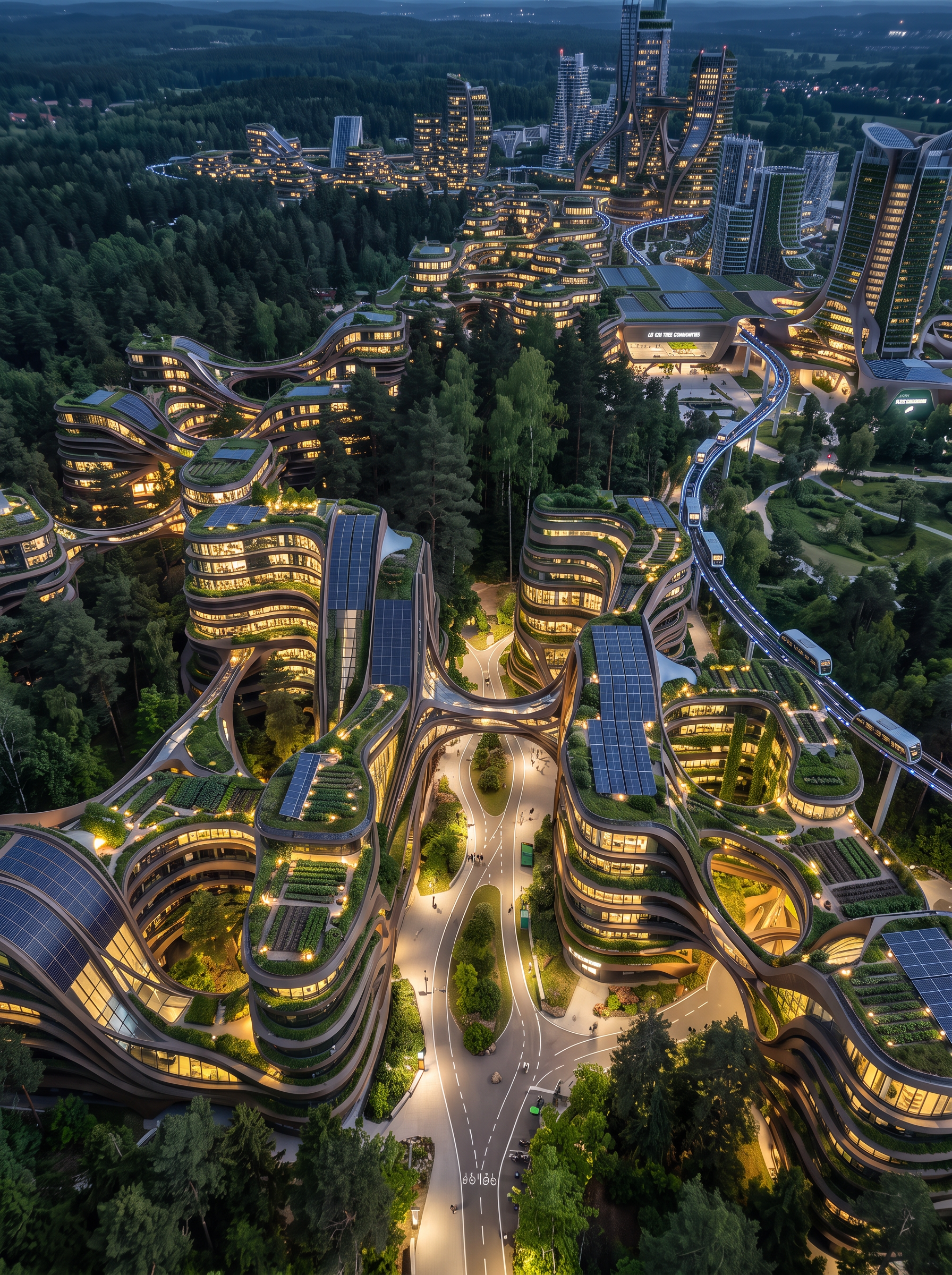
Look at what we will accomplish within just 20 years by intentionally redirecting more of that power toward ourselves: thriving communities, economic independence, advanced technologies, exceptional education, sustainable cities, and institutions that protect and empower generations yet to come.
This is not hyperbole. We have already demonstrated our ability to help build prosperity for the world. Now know and understand what becomes reality when we make building that same prosperity for ourselves a collective priority. The future we envision is not beyond our power. It begins with how we choose to use it.
Newbeings 1619: We innovate, or we dissipate.