Four Black students were waiting for a ride after football practice. A new lawsuit over a canceled AI gun alert at Maryland’s Kenwood High School asks whether a correction can move as fast as an alarm.
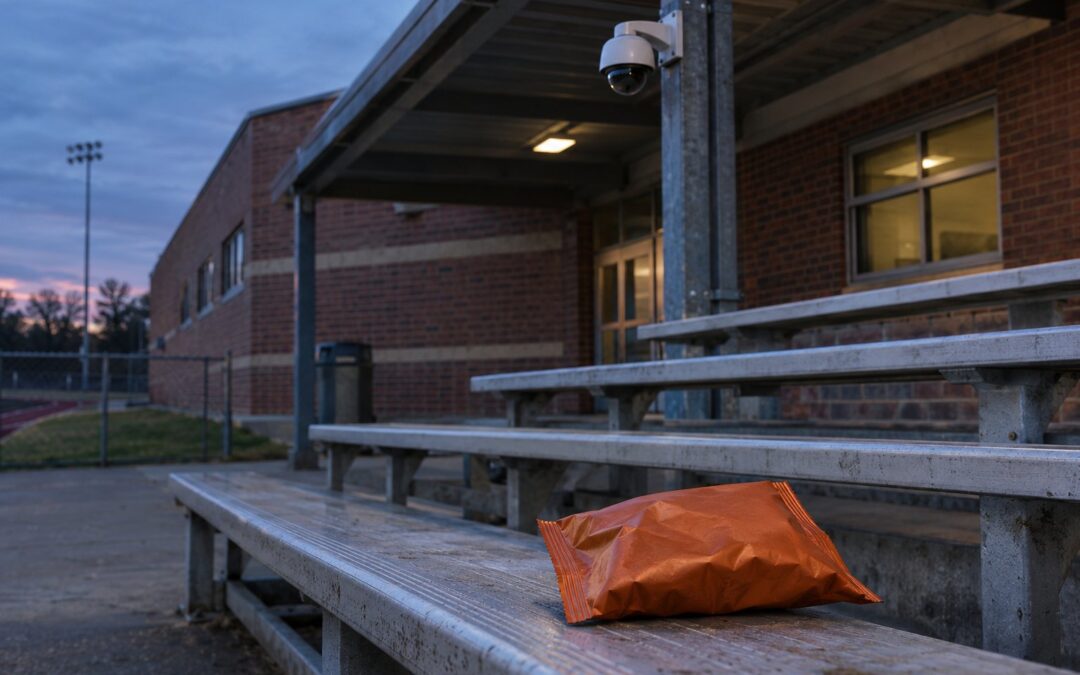
Waiting for a ride after practice is supposed to be the dull part of the evening. At Kenwood High School on October 20, 2025, four teenagers stood outside talking and joking. One was eating chips his coach had given him. In the account they filed in court this week, the next thing they knew, officers were approaching with guns drawn. The students say they were ordered to their knees, handcuffed and searched. No gun was found. Read the filing announcement and CBS Baltimore’s reporting on the body-camera footage.
The four Black current and former students filed suit in Baltimore County Circuit Court on November 17, 2026. They allege civil rights violations and negligence, and seek damages and an order barring use of the system until safeguards are in place. The allegations are not court findings. Omnilert and county police declined to comment on pending litigation, NBC News reported November 18. Omnilert previously said the technology worked as designed by flagging a possible threat for human review, according to CBS Baltimore.
The first message was easier to act on than the second
The Maryland Office of the Inspector General for Education found that the student’s hand position and movement were part of what triggered the alert. The software did not simply look at a bag and decide the bag was a gun. School safety staff and a county police official reviewed the alert, deemed the threat invalid and sent a cancellation by text. The principal told investigators she was examining the footage and did not see the cancellation until after speaking with police personnel who told her the grounds had been cleared. The inspector general found that the formal process for overriding a cancellation could be bypassed with a phone call or a text. See the inspector general’s amended report, case 25-0014-I.
The students allege that the principal sent a screenshot to a school resource officer more than ten minutes after the original alert was canceled, and that the screenshot was forwarded to county police. That allegation is part of the new lawsuit. The problem it points to goes well beyond one school: a screenshot can preserve suspicion long after the people responsible for checking it have called it off. A human review is only as good as the system that gets the correction to the people with the power to act on it.
Count what happens after the alert
The inspector general reported that fewer than 1% of the alerts Omnilert forwarded to the district during the period reviewed required notifying law enforcement. That is not a measure of every error the system made. Investigators found no evidence of bias in how the software identified objects as possible threats in the investigation. That is a different question from which students were stopped, searched or handcuffed after an alert. I found no public district-level racial breakdown of those outcomes in the records I checked the morning of November 19, Eastern time. Newbeings 1619 seeks to help fill gaps like this with verified information that protects students’ identities.
There is a reason to ask for that breakdown without pretending we already know the answer. In a separate national analysis of 2017–18 data, the U.S. Government Accountability Office found that Black students, along with some other groups, were arrested at school at two to three times the rate of white students. That study does not establish who is most affected by AI alerts in Baltimore County, and the student detentions described here are not the arrests measured in that report. What the federal evidence does establish is why school boards ought to look at what happens when a new tool feeds into an existing police response. Read the GAO’s student arrest analysis.
Put the all-clear where it can stop the response
Before renewing a surveillance contract, a school board should ask for a controlled drill with school staff and dispatchers: send a test alert, cancel it, then have someone forward the original screenshot. Does dispatch see the cancellation? Who must confirm receipt? Who can verify new evidence and authorize a response? A credible report of immediate danger still needs a route to 911. A screenshot from a canceled alert should never stand in for a new report. The inspector general recommended a two-stage notification process and regular training. Maryland law calls for a final state study of school weapon detection by December 1, 2026. That makes this a good moment to ask what the state is measuring. Read the Maryland General Assembly’s bill record.
Baltimore County residents can use the board’s public comment process to ask for a public accounting: alerts, cancellations, dispatches, stops, searches and verified weapons, with demographic breakdowns where privacy permits. Ask for the current policy and staff training requirements through the district’s public records portal. Then bring your district’s public policies to the Newbeings 1619 social platform. Leave out students’ names and identifying details. The question worth taking to your own school board: Can you show us an all-clear arriving in time to protect somebody?
The warning flashed across the screen.
The all-clear went by half unseen.
Let truth keep pace with every call,
Before a child is made to fall.